Complex Dentistry
Complex Dentistry
In individuals whose teeth have been damaged by injury, tooth grinding, extensive decay, or gum disease rebuilding of their broken down or worn teeth can be accomplished with modern day techniques. Missing teeth can be replaced with either bridgework, removable partial dentures, or dental implants as needed. Regardless of the condition of the teeth, improvements can be made that can improve eating and speaking abilities as well as the individual’s appearance.
Complex restorative dentistry is very detailed and intricate. Patients requiring this form of dentistry usually have multiple issues with a variety of signs and symptoms. They may include occlusal (bite) problems, mobility (loose teeth,) mal-alignment, periodontal (gum) problems, and chipped or broken teeth, and often aesthetics that patients are unhappy with. Many patients are unaware of these indicators when they present for examination
The examination, diagnosis and planning process may require more than one visit. Every detail is explained to the patient with models, photographs and x-rays. We utilize 3D imaging to guide treatment giving a higher level of precision.
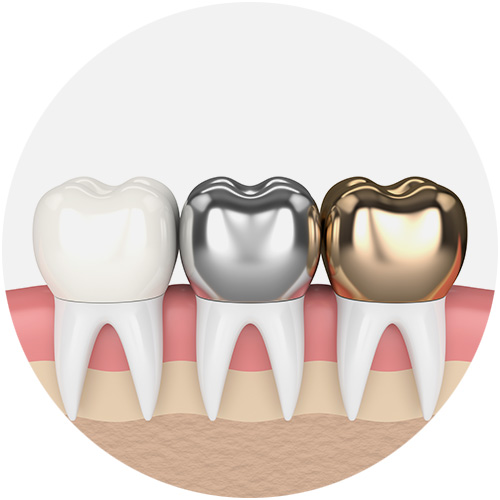
Dental Crowns
Crowns are a cosmetic restoration used to strengthen a tooth or improve its shape. Crowns are most often used for teeth that are broken, worn, or partially destroyed by tooth decay.
Crowns are “cemented” onto an existing tooth and fully cover the portion of your tooth above the gum line. In effect, the crown becomes your tooth’s new outer surface. Crowns can be made of porcelain, metal, or both. Porcelain crowns are most often preferred because they mimic the translucency of natural teeth and are very strong. Your dentist will discuss what will best for you.
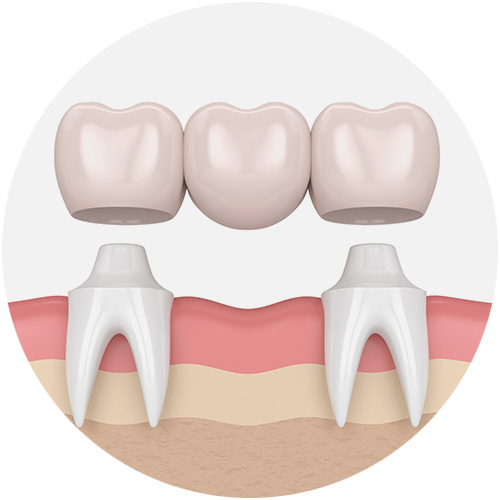
Dental Bridges
A bridge may be used to replace missing teeth, help maintain the shape of your face, and alleviate stress on your bite.
A bridge replaces missing teeth with artificial teeth, looks great, and literally bridges the gap where one or more teeth may have been. Your bridge can be made from gold, alloys, porcelain, or a combination of these materials, and is bonded onto surrounding teeth for support.
The success of any bridge depends on its foundation — the other teeth, gums, or bone to which it is attached. Therefore, it’s very important to keep your existing teeth, gums, and jaw healthy and strong.
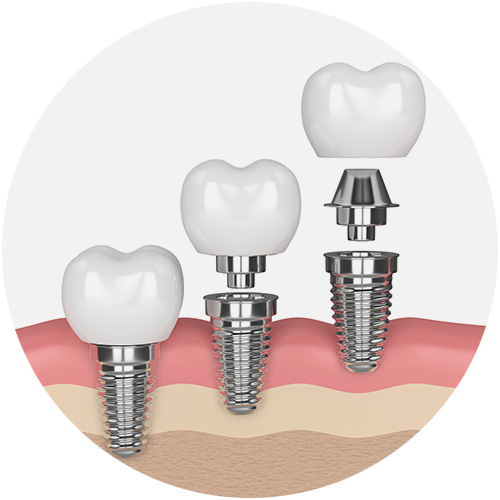
Dental Implant
People are living longer than ever, and while regular brushing, flossing, and check-ups allow many of us to maintain our natural smiles for a lifetime, sometimes our teeth just can’t keep up. If you’ve lost a tooth (or a few teeth) due to injury or disease, dental implants can rejuvenate both your smile and your oral health.
An implant is a synthetic tooth root in the shape of a post that is surgically placed into the jawbone. The “root” is usually made of titanium: the same material used in many replacement hips and knees, and a metal that is well-suited to pairing with human bone. A replacement tooth is then fixed to the post. The tooth can be either permanently attached or removable. Permanent teeth are more stable and feel more like natural teeth.
The ideal candidate for implants is a non-smoker who has good oral health, including a sufficient amount of bone in the jaw, and healthy gums with no sign of gum disease.
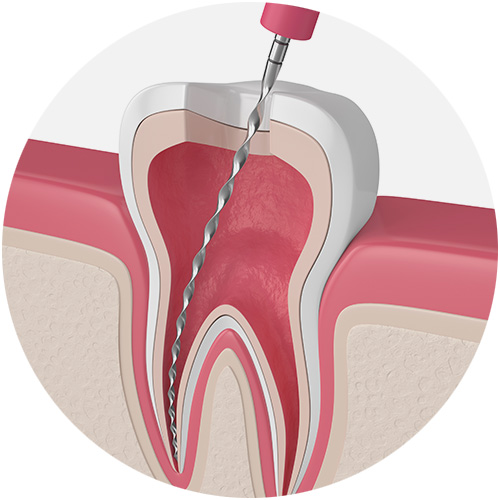
Root Canal Treatment
Root canal, is a relatively painless treatment which aims at clearing infection as well as protecting the tooth from subsequent infections.
When a tooth is cracked or has a deep cavity, bacteria can enter the pulp tissue and germs can cause infection. If left untreated, an abscess may form. If the infected tissue is not removed, pain and swelling can result. Without the proper treatment, your tooth may have to be removed.
Teeth that require endodontic therapy are not always painful. However, signs you may need a root canal include:
- Severe toothache
- Pain upon chewing or application of pressure
- Prolonged sensitivity to heat or cold
- Dark discoloration of the tooth
- Swelling and tenderness in the nearby gums
Root canal treatment involves one to three visits during which your dentist removes the affected tissue. After the tissue is removed, the interior of the tooth will be cleaned and sealed.
Finally, the tooth is filled with a dental composite. Your Dentist may suggest placing a crown to strengthen and protect the tooth from breakage. If you continue to care for your teeth and gums with regular brushing, flossing, and check-ups, your restored tooth can last a lifetime.
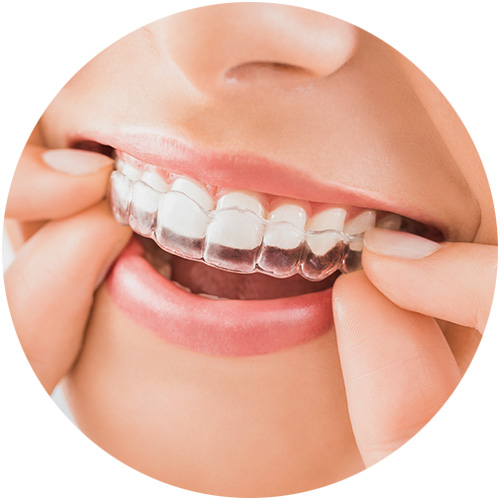
Invisalign® – The Clear Choice for a Confident Smile
Straighten your teeth discreetly and comfortably with Invisalign®, the world’s leading clear aligner system.
Unlike traditional braces, Invisalign uses a series of virtually invisible, custom-designed aligners to gently move your teeth into their ideal position — without metal brackets or wires.
Using advanced 3D digital scanning technology, we create a precise, personalised treatment plan tailored to your smile. You’ll even be able to see a preview of your expected results before treatment begins.
Designed Around Your Lifestyle
Invisalign is created for busy adults and teens who want results — without disrupting their daily lives.
- Virtually invisible – Most people won’t notice you’re wearing them
- Removable – Eat what you love and maintain normal brushing and flossing
- Comfortable – Smooth, custom-fit aligners with no wires or sharp edges
- Discreet and professional – Ideal for work, social events, and special occasions
- Predictable results – Digitally planned for precision and efficiency
Simply wear your aligners for 20–22 hours per day, changing to a new set approximately every two weeks as your smile gradually transforms.
Treatment times vary depending on your individual needs, with many cases completed in as little as 6–12 months.
Is Invisalign Right for You?
Invisalign can effectively treat:
- Crowded or overlapping teeth
- Gaps or spacing issues
- Mild to moderate bite concerns
- Relapse from previous orthodontic treatment
Every smile is unique. We carefully assess each patient to ensure Invisalign is the right solution and will always guide you toward the most appropriate treatment for long-term, stable results.
Our Dentistry Services
Preventative Dental

General Dentistry

Complex Dentistry
Digital Dentistry
Dr Alison Lau
Dentist
Dr Alison Lau graduated with a Doctor of Dental Surgery (Distinction) from the University of Melbourne. Dr Alison prioritises a gentle, patient and honest approach with her patients. Having spent ten years growing up in Malaysia, she witnessed firsthand the challenges of limited dental care.
Book An Appointment Online Today!
Book your appointment online today for a quick, easy, and convenient scheduling experience.